
Customer expectations are rising. They want fast responses across multiple channels, personalized service, and zero frustration. And with a whopping 83% of consumers saying they’re more likely to trust brands that provide an excellent customer service experience,1 businesses need to stop thinking of contact centers as a support function and start seeing it as a competitive advantage.
TL;DR
- Contact center technology is the suite of cloud tools, from VoIP and IVR to CRM integration and analytics, that manages customer interactions across phone, email, chat, SMS, and social in one system.
- With 62% of customers expecting consistent service across channels, businesses are moving from voice-only call centers to contact center platforms that carry customer history across phone, chat, email, and social.
- Gartner predicts AI, through virtual agents, agent assist, and sentiment analysis, will resolve 80% of common customer service issues by 2029, making it the defining trend for modern contact centers.
- Across industries, contact center tools solve specific problems, from clinics routing calls with IVR and ACD to retailers keeping a customer's chat, SMS, and phone call in one connected thread.
Modern contact center technology has evolved to meet these demands. In this guide, we explore how the types of call center technology and the latest contact center technology trends can help your teams meet (and exceed) customer expectations.
Contact Center Technology vs. Call Center Technology
The terms "call center technology" and "contact center technology" often get used interchangeably, but there's an important distinction between them.
- Call center technology supports voice interactions over the phone. It's what most people think of when they picture a contact center: agents answering calls and routing conversations.
- Contact center technology is broader. It encompasses voice, video, SMS, chat, email, social media, and other digital channels.
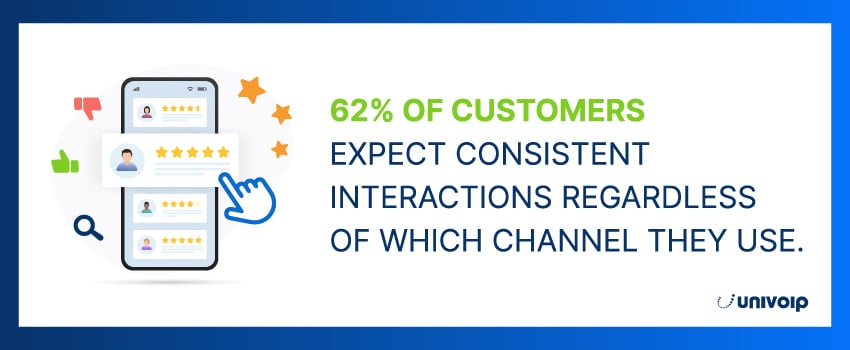
More businesses are shifting from voice-only call center systems to full-fledged contact center systems that integrate all communication touchpoints. And this shift isn’t optional. Zendesk’s 2025 CX Trends report found that 62% of customers expect consistent interactions regardless of which channel they use2 – and companies that fail to provide this consistency lose customers to competitors that do.
What Are the Types of Contact Center Technologies?
Modern contact center systems are made up of several technologies that work together to deliver a seamless experience. Not sure where to start? UniVoIP delivers customizable, cloud-native contact center solutions that combine all these technologies into one platform:
Voice over Internet Protocol (VoIP)
VoIP transmits phone calls over the internet instead of traditional landlines, and it's the foundation most other contact center technologies build on. Because agents only need an internet connection and a VoIP-enabled device, whether a desk phone, laptop, or mobile app, your team can work from anywhere. It also removes the cost and upkeep of legacy phone hardware.
Automatic Call Distributors (ACDs)
ACDs automatically route inbound calls to the right agent based on predefined rules like agent skills, language capabilities, current availability, or customer history. Rather than customers waiting in a queue until any agent becomes free, ACDs match calls to the agent best positioned to help.
Interactive Voice Response (IVR)
IVR systems let callers navigate a menu and self-direct their inquiry using voice or keypad input. Since IVRs handle basic tasks like balance inquiries or appointment confirmations, your team can focus more on interactions that require human judgment.
Omnichannel Routing
Customers often jump between channels during a single interaction. They might start with a chat, then call during business hours, then send an email follow-up. Omnichannel routing ensures that regardless of how customers reach out, they can continue conversations exactly where they left off for more consistent support.
Intelligent Virtual Agents (IVAs)
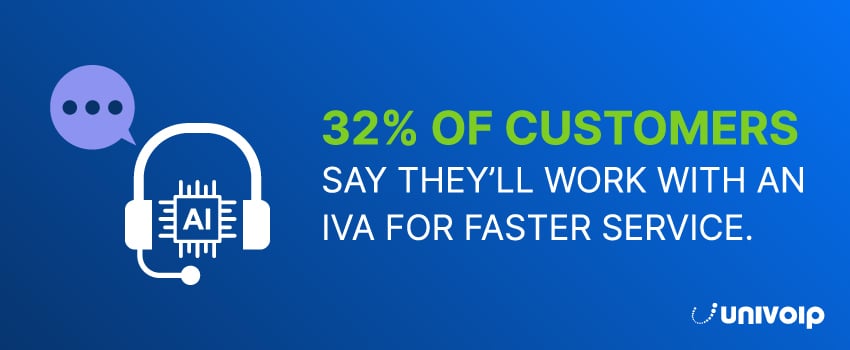
IVA systems are a bit like AI-powered versions of IVRs. Instead of using static menus, they engage users in natural language and can resolve complex issues without human intervention. And with 32% of customers saying they’ll work with an IVA for faster service,3 it’s becoming one of the most popular contact center technologies.
Workforce Optimization (WFO)
WFO tools like workforce management, quality monitoring, call recording, and performance analytics give leadership visibility to make data-driven staffing decisions and support agent development.
Real-Time Analytics & Reporting
Analytics engines track key metrics like average handle time, first-call resolution rates, customer sentiment, and agent productivity. Contact center teams can then use these insights to refine processes, identify bottlenecks, and make staffing adjustments based on actual data.
CRM Integration
CRM integration connects your contact center system directly to your customer data. This means that when an agent takes a call or chat, they can see the customer's full interaction history, preferences, previous tickets, and account details.
Top 6 Contact Center Technology Trends
Here are some of the most important contact center trends to watch in 2026 and beyond:
1. AI and Automation
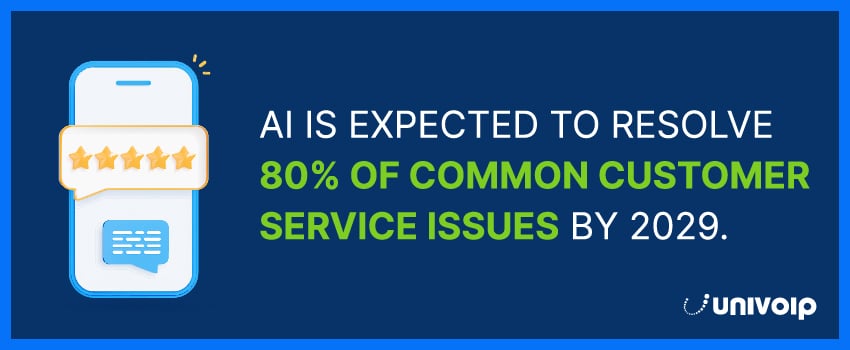
Gartner predicts that AI will resolve 80% of common customer service issues by 2029.4 It’s easy to see how, considering:
- AI-powered IVAs resolve customer issues without human involvement.
- Agent assist tools provide real-time recommendations to agents during calls.
- Sentiment analysis flags frustrated customers so supervisors can intervene.
At UniVoIP, we work with businesses to integrate contact center automation and AI tools that actually align with your customer service goals – without slowing down productivity.
2. Cloud-Based Contact Center Systems
Cloud contact center systems offer flexibility, built-in redundancy, and lower overhead than traditional on-prem systems. As a result, these platforms let you deploy services faster, scale capacity on demand, and support distributed teams without having to add to your existing infrastructure.
3. Self-Service Expansion
Customers want to solve problems on their own – if it’s fast and easy. That means self-service portals, IVRs, knowledge bases, and chatbots are now essential for a contact center system.
The goal isn’t to eliminate human interaction but to reserve it for high-value or sensitive inquiries while automating the rest.
4. Customer Experience
One major shift we’ve seen in contact center industry trends is that more companies are realizing that experience, not price or product features, is key to differentiation. This means contact centers are no longer cost centers; they’re strategic drivers of:
- Customer Loyalty: Exceptional contact center experiences keep customers coming back, increasing lifetime value and reducing churn.
- Brand Reputation: Positive or negative contact center experiences spread through reviews, social media, and word-of-mouth, shaping overall brand perception.
- Reduced Costs: Providing better customer experiences lowers operational costs long-term through improved efficiency and reduced repeat contacts.
- Revenue Growth: Businesses that prioritize CX often see revenue increases year over year compared to those focused on cost reduction alone.
Contact center systems are built to support this shift. They’re customer-centric by design, rich with data for decision-making, and flexible enough to adapt as your business evolves.

5. Omnichannel Features
Businesses that focus on offering omnichannel options retain 89% of their customers, compared to just 33% for companies with a weak omnichannel strategy.5
Contact center technologies support omnichannel engagement with unified conversation threads, so agents can see the complete customer journey regardless of which channel a customer is using to connect.
6. Real-Time Data and Predictive Insights
One of the most powerful contact center technology trends is the ability to analyze real-time data and act on it instantly. For example, advanced contact center platforms can now monitor call data and optimize service by routing high-value callers to more senior agents.
Contact Center Technology Examples Across Industries
Here's how these technologies show up in real operations across different industries:
-
Healthcare clinics: IVR and ACD work together to route appointment, billing, and prescription calls to the right desk, so patients reach the correct department without an operator.
-
Retail during a holiday rush: omnichannel routing keeps a shopper's chat, SMS, and follow-up call in one thread, so agents never ask them to repeat an order number.
-
Banks and credit unions: CRM integration surfaces the caller's account, recent transactions, and open tickets the moment a call connects, cutting handle time and verification friction.
-
E-commerce support: an intelligent virtual agent resolves password resets and order-status checks around the clock, then hands off complex returns to a live agent with the full conversation attached.
-
Seasonal operations: workforce optimization forecasts a predictable Friday-afternoon spike and schedules extra agents in advance, instead of scrambling once the queue climbs.
-
Growing support teams: real-time analytics flag a rising abandonment rate mid-shift, giving supervisors the cue to pull agents from email onto phones before service levels slip.
The common thread is that each tool solves a specific operational problem, and they deliver the most value when they share customer data through one connected system.
Future-Proof Your Contact Center With UniVoIP
Today’s contact center technology offers endless ways to improve customer experience and efficiency. But navigating the changing contact center landscape can be overwhelming without the right partner.
At UniVoIP, we bring decades of expertise in enterprise communication to help you select, implement, and optimize a contact center system that empowers your agents and drives business results. Want to see how modern contact center technologies can transform your customer support? Contact UniVoIP today to get started.
Contact Center Technology FAQs
What is contact center technology?
Contact center technology is the set of software and tools businesses use to manage customer interactions across phone, email, chat, SMS, and social media. Unlike older call centers that handled voice only, it unifies every channel so agents get full customer context and can resolve issues faster. Core tools include VoIP, ACD, IVR, omnichannel routing, CRM integration, workforce optimization, and analytics, usually delivered through one cloud platform. Together they route each interaction to the right place and give teams the data to keep improving service.
What is the difference between call center and contact center technology?
Call center technology supports voice interactions only: agents answering and routing phone calls. Contact center technology is broader, covering voice plus video, SMS, chat, email, and social media in one system. The practical difference shows up when a customer starts on chat and then calls: a contact center platform carries that history across channels, while a voice-only call center cannot. Most businesses are moving from call center to contact center systems because customers now expect consistent service no matter which channel they use.
What are the main types of contact center technology?
The main types of contact center technology fall into three groups. Communication tools like VoIP and omnichannel routing let customers reach you on any channel. Automation and routing tools, including ACD and IVR, send each contact to the right agent or self-service option. Intelligence and management tools, such as CRM integration, intelligent virtual agents, workforce optimization, and real-time analytics, give agents context and help leaders manage performance. Most modern platforms combine all three groups in a single cloud system.
What is VoIP and why does it matter for contact centers?
VoIP, or Voice over Internet Protocol, transmits phone calls over the internet instead of traditional landlines. It matters because it's the foundation most other contact center tools build on, and it frees your team from legacy phone hardware. Agents can take and make calls from a desk phone, laptop, or mobile app anywhere with an internet connection, which makes remote and hybrid support far easier. VoIP also lowers setup and maintenance costs compared with on-premise phone systems.
What is the difference between ACD and IVR?
ACD and IVR work together but do different jobs. IVR, Interactive Voice Response, is the automated menu that greets callers and lets them self-direct with voice or keypad input, handling simple tasks like balance checks. ACD, Automatic Call Distribution, is the routing engine that sends each call to the best-suited agent based on rules like skill, language, or availability. In practice, IVR collects what the caller needs, then ACD decides which agent should take it.
Is AI replacing contact center agents?
Not replacing agents, but reshaping their role. AI handles routine, repetitive work: intelligent virtual agents resolve common questions, agent-assist tools surface answers during live calls, and sentiment analysis flags frustrated customers for quick escalation. That frees people to focus on complex, sensitive, or high-value conversations that need judgment and empathy. Gartner predicts AI will resolve 80% of common customer service issues by 2029, but human agents remain essential for the interactions automation cannot handle well.
Sources:
- https://hyken.com/research
- https://www.zendesk.com/blog/zip2-transform-your-contact-center-omnichannel-self-service
- https://www.salesforce.com/en-us/wp-content/uploads/sites/4/documents/research/State-of-the-Connected-Customer.pdf
- https://www.gartner.com/en/newsroom/press-releases/2025-03-05-gartner-predicts-agentic-ai-will-autonomously-resolve-80-percent-of-common-customer-service-issues-without-human-intervention-by-20290
- https://www.nextiva.com/blog/omnichannel-customer-experience.html