
Today’s customers expect to reach your business how they want. But when communication platforms operate independently, customer experience suffers. Teams waste time switching between disconnected systems trying to piece together customer history, and customers end up repeating themselves across channels.
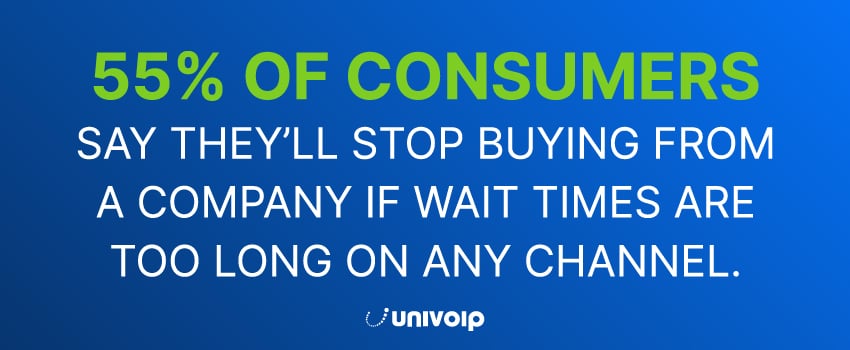
Sound familiar? This is multichannel communication gone wrong, and it's costing your business more than you realize. Over half of consumers (55%) say they’ll stop doing business with a company if wait times are too long on any channel, yet 74% of customer service leaders say constant tool-switching slows ticket resolution.1
At UniVoIP, we help businesses navigate the complexity of modern communication systems through our Contact Center platform. Here's what you need to know about multichannel communication – when it works, when it doesn't, and how to fix it.
TL;DR
- Multichannel communication means using several platforms like phone, email, chat, and social media to reach customers, but it only boosts productivity when those channels are integrated rather than siloed.
- Disconnected channels force teams to piece together customer history manually and drive constant context switching, which costs 23 minutes of refocus time after each interruption.
- An effective multichannel strategy gives each channel a clear purpose, integrates tools so data flows between them, and automates routine messages to cut the noise.
What Is Multichannel Communication?
Multichannel communication is when businesses use multiple platforms and channels to interact with customers, employees, and stakeholders. These channels include any medium through which information flows in and out of your organization, like phone calls, email, SMS, chat, social media, video conferencing, and more.
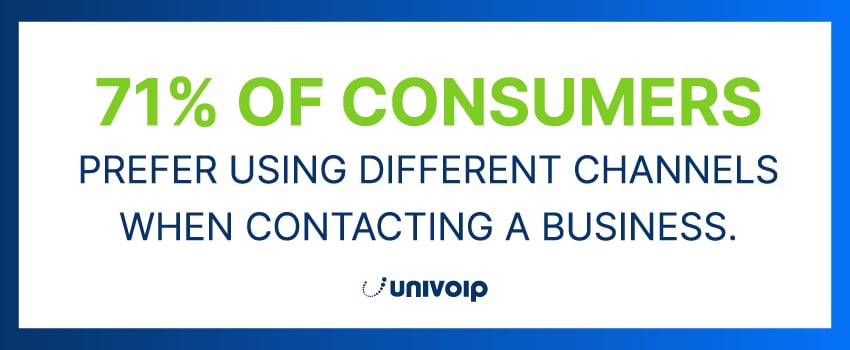
The goal of multichannel communication is to meet people where they are – a must, considering 71% of consumers prefer using different channels depending on context.2 By offering multiple channels, businesses increase accessibility and improve the chances that messages actually reach their intended audience.
However, simply having multiple channels doesn't guarantee success. The real question is whether those channels are working together or working against each other.
Multichannel Communication vs. Omnichannel Communication
It's important to distinguish between multichannel and omnichannel communication. While they sound similar, the difference is significant.
- Multi-channel communication means you have multiple channels available – phone, email, chat, social media – but those channels often operate in silos. For example, a customer might start a conversation via email, call your support line, and then send a follow-up text. But if each channel is independent, your team has no unified view of that interaction history.
- Omnichannel communication integrates all of your channels into a single, cohesive system. When a customer reaches out via chat, agents can see their previous email exchanges, call history, and account notes in one place.
The productivity problems we're discussing in this article almost always stem from multichannel setups that lack integration. When channels don't talk to each other, teams are forced to do the heavy lifting manually – and that's where efficiency breaks down.
When Does a Multichannel Communication Platform Improve Productivity?
Let's be clear: multichannel communication isn't inherently bad. When done right, it's a competitive advantage. Here are the scenarios where it genuinely improves productivity and customer satisfaction:
Customers Get Faster Responses
Offering multiple contact options means customers can choose the channel that's most convenient for them at that moment. A quick question might go to chat. A complex issue might warrant a phone call. When customers can self-select the right channel, they get help faster – and your team handles inquiries more efficiently.
Teams Can Specialize by Channel
Some support agents excel at phone support. Others are better suited to written communication via email or chat. Multichannel setups allow you to assign team members to the channels where they perform best, improving both quality and speed.
You Reach People Where They Are
Maintaining presence across multiple channels lets you increase the likelihood that your message – whether it's a customer update, a sales follow-up, or an internal announcement – actually gets seen. UniVoIP’s Contact Center solution is built to help businesses manage voice, chat, and web interactions from one platform, giving teams the flexibility of multiple channels without the chaos of fragmentation.
When Does Multichannel Communication Overload Kill Productivity?
Now for the hard truth: most businesses implement multichannel communication poorly, and it backfires. Here's when more channels make things worse:
Channels Operate in Silos
This is the most common problem. Your team uses email, Slack, Teams, a ticketing system, SMS, and phone calls – but none of these systems share data. An agent answering a call has no idea that the customer already emailed twice yesterday. Information gets duplicated, requests fall through the cracks, and customers have to repeat themselves endlessly.
Result: Frustrated customers and wasted agent time.
There's No Clear Channel Ownership
If nobody is responsible for monitoring a specific channel, messages go unanswered. Someone asks a question in a Slack channel, assumes someone else will respond, and the question sits unanswered for hours – or days. Accountability vanishes when everyone assumes someone else is handling it.
Context Switching Becomes Constant
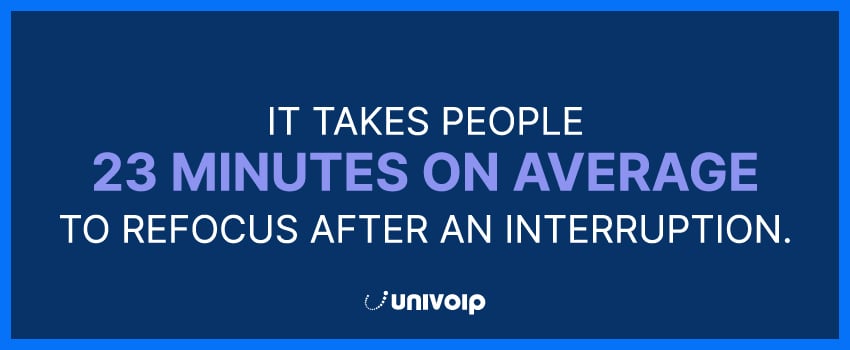
It takes people 23 minutes on average to refocus after an interruption.3 When your team is bouncing between five different communication tools throughout the day, they're hemorrhaging focus. What feels like multitasking is actually productivity loss in disguise.
Volume Overwhelms the Team
Adding more channels increases your surface area for inbound communication – which sounds good until your team can't keep up. If you don't have the bandwidth or the automation to handle higher message volumes, you're just creating more opportunities for things to slip through the cracks.
How To Build an Effective Multichannel Communication Strategy
So how do you get the benefits of multichannel communication without the productivity downsides? It starts with strategy.
1. Define the Purpose of Each Channel
Every channel should have a clear role. For example, phone calls might be reserved for urgent or complex issues. Email handles formal requests. Chat is for quick questions. SMS is for appointment reminders or time-sensitive updates. When your team and your customers understand which channel to use for what, communication becomes more efficient.
2. Integrate Your Channels
Bring your communication channels into a unified platform wherever possible. You shouldn’t force everyone to use only one tool; instead, just make sure data flows between each of your tools. A customer who reaches out to your business via chat should have that history visible when they call in, and an email inquiry should update your CRM automatically.
Our OfficeConnect™ UCaaS platform provides exactly this kind of integration, connecting voice, video, messaging, and collaboration tools into one cohesive system.
3. Automate Where Possible
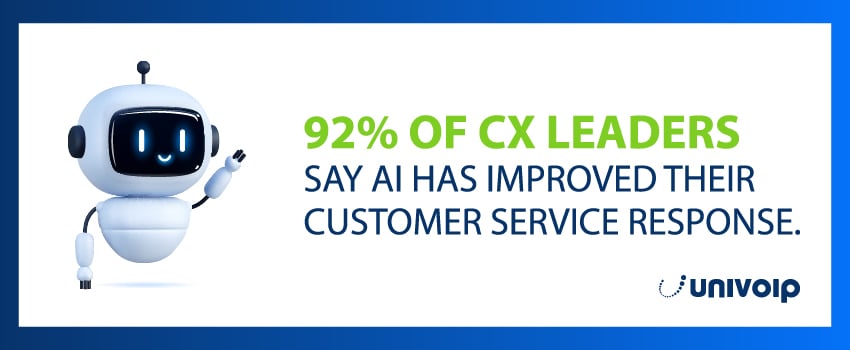
The majority (92%) of CX leaders say AI has improved their customer service response.4 That’s because not every message requires a human response. Use AI-powered chatbots to handle routine inquiries, automation to flag urgent issues, and intelligent routing to ensure the highest-priority messages get immediate attention.
4. Monitor and Adjust
Make sure to track which channels are generating the most volume, which are delivering the best outcomes, and which are causing bottlenecks. Use analytics to identify where your multichannel strategy is working and where it's creating friction. Then adjust.
What Role Do Multichannel Communication Services Play in Modern Business?
Customers expect to reach businesses on their terms, through the channel of their choice. Employees expect communication tools that keep them connected no matter where they're working. Meeting these demands means adopting multichannel communication in a way that doesn’t create chaos.
At UniVoIP, our approach to multichannel communication is built around integration and intelligence. Whether you're managing a contact center handling thousands of daily interactions or coordinating internal communication across a distributed workforce, our platforms are designed to keep information flowing – without the fragmentation that kills productivity.
Turn Multichannel Chaos into Clarity with UniVoIP
Multichannel communication is a powerful tool when it's implemented strategically. It gives customers more ways to reach your business, empowers your teams with flexibility, and ensures critical messages don't get lost. But without integration and a clear strategy, it can quickly become a productivity drain.
The difference between a multichannel communication system that helps and one that hurts comes down to how well your channels work together. If your team is constantly context-switching and information is getting lost in siloed workflows, it's time to rethink your approach.
UniVoIP's Contact Center solution brings multichannel communication under one roof – with the intelligence, automation, and integration your team needs to stay productive.
Ready to streamline your multichannel communication? Contact our team today to learn how UniVoIP can help you deliver better customer experiences without the productivity cost.
Multichannel Communication FAQs
What is multichannel communication?
Multichannel communication is when a business uses multiple platforms to interact with customers, employees, and stakeholders. Common channels include phone calls, email, SMS, live chat, social media, and video conferencing. The goal is to meet people where they already are, which increases accessibility and improves the odds that your message reaches its audience. Having multiple channels doesn't guarantee results, though. What matters is whether those channels work together or operate in isolation from each other.
What's the difference between multichannel and omnichannel communication?
Multichannel means you offer several channels (phone, email, chat, social) but they often run in silos, so your team has no unified view of a customer's history. Omnichannel integrates every channel into one connected system. When a customer reaches out on chat, agents can see their past emails, call history, and account notes in a single place. The productivity problems businesses blame on "too many channels" almost always come from multichannel setups that lack this integration.
When does multichannel communication hurt productivity?
Multichannel communication hurts productivity when channels operate in silos and don't share data. An agent answering a call has no idea the customer already emailed twice yesterday, so information gets duplicated and requests slip through the cracks. It also breaks down when no one owns a specific channel and messages sit unanswered for hours. Constant context switching is another drain: it takes people 23 minutes on average to refocus after an interruption, so bouncing between five tools quietly bleeds away focus. High message volume without automation makes all of this worse.
When does multichannel communication improve productivity?
Multichannel communication improves productivity when it's implemented with integration and clear structure. Customers get faster responses because they can pick the channel that suits the moment: a quick question goes to chat, a complex issue to a phone call. Teams can specialize, assigning agents to the channels where they perform best. You also reach people where they already are, so updates, follow-ups, and announcements are more likely to be seen. Done right, more channels mean more accessibility without more chaos.
How do you build an effective multichannel communication strategy?
Start by defining the purpose of each channel so your team and customers know which one to use for what: phone for urgent or complex issues, email for formal requests, chat for quick questions, SMS for time-sensitive updates. Next, integrate your channels so data flows between them; a chat conversation should be visible when the same customer calls in. Automate routine inquiries with chatbots and intelligent routing so your team isn't buried. Finally, track which channels drive volume and results, then adjust based on what the data shows.
Sources:

/univoip-feat-whatisUCAAS.jpg)