The way businesses communicate has fundamentally changed. Gone are the days when scaling meant investing in expensive on-premise phone systems, hiring IT staff to manage infrastructure, and hoping your communication tools could keep pace with growth.
The cloud has made enterprise-grade communication accessible to businesses of every size, with over 2.4 million organizations using cloud-based communications as of 2024.1 These systems deliver flexibility, reliability, and scalability that traditional phone infrastructure just can't match, so if you haven’t made the switch yet, there’s a chance your business is already falling behind.
At UniVoIP, we've helped hundreds of organizations transition to the cloud through our Cloud Voice for Microsoft Teams, OfficeConnect™ UCaaS platform, and Contact Center solutions. Here's everything you need to know about what cloud communications is and how it powers business growth.
TL;DR
- Cloud communications delivers voice, video, messaging, and collaboration over the internet through provider-managed data centers, replacing the on-premise phone systems, servers, and cabling of traditional setups.
- Because cloud communications requires no on-site hardware, new users and offices can be provisioned in minutes rather than weeks, so communication capacity scales at the speed of the business.
- Running voice over VoIP can cut monthly phone bills by up to 50%, and predictable per-user subscription pricing replaces the large upfront cost of traditional phone systems.
What Is Cloud Communications?
Cloud communications refers to voice, video, messaging, and collaboration services that are hosted and delivered over the internet rather than through traditional on-premise hardware. Instead of maintaining physical phone systems, servers, and cabling infrastructure in your office, all communication services run through secure cloud-based platforms managed by your provider.
As a result, your:
- Employees can make and receive business calls from their laptops, smartphones, or desk phones.
- Customer service teams can handle interactions across voice, email, chat, and SMS from a single unified interface.
- IT teams no longer spend hours troubleshooting hardware failures or managing software updates.
The shift to cloud communications represents a fundamental change in how communication infrastructure is delivered, maintained, and scaled – offering businesses unprecedented flexibility and control.
How Cloud-Based Communications Platforms Work
Understanding the underlying technology helps explain why cloud-based communications platforms are so effective for scaling businesses. Here are the basics:
Hosted Infrastructure
With traditional phone systems, all the equipment – PBX hardware, phone lines, servers – sits in your office. With cloud communications, that infrastructure is hosted in secure, redundant data centers managed by your provider. Your team accesses services through softphones, web browsers, or mobile apps.
Internet-Based Voice and Data Transmission
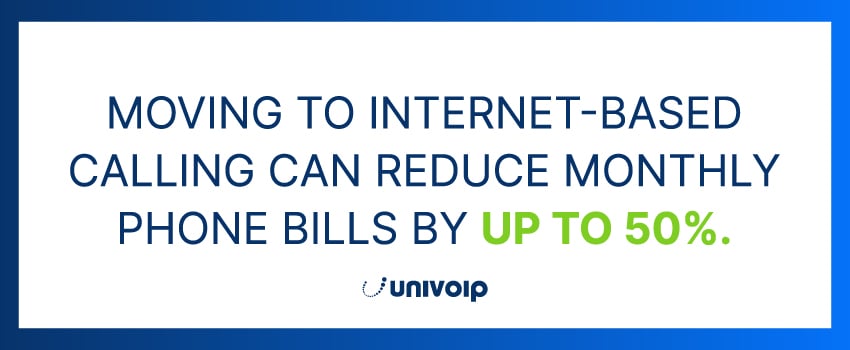
Cloud-based voice communications use Voice over Internet Protocol (VoIP) to transmit calls over the internet rather than through traditional phone lines. This eliminates the need for on-premise infrastructure and can reduce monthly phone bills by up to 50%.2
Continuous Updates and Maintenance
Because the platform lives in the cloud, updates, patches, and new features are deployed automatically by your provider. You don't need to schedule downtime or coordinate IT resources to upgrade systems. New capabilities simply appear.
Integrated Collaboration Tools
Modern cloud communications platforms go far beyond voice. They integrate video conferencing, team messaging, file sharing, screen sharing, and presence indicators – creating a unified collaboration environment that supports how teams actually work today.
Why Are Cloud-Based Voice Communications Essential?
Cloud communications encompasses many channels, but with 75% of customers saying they still prefer phone calls for customer support,3 voice remains foundational. Cloud-based voice communications leverage VoIP to deliver reliability and quality that rivals or exceeds traditional phone systems, with benefits like:
- Superior Call Quality: Modern VoIP codecs deliver HD voice quality when paired with adequate bandwidth.
- Global Reach: Cloud systems let your teams send and receive calls anywhere in the world without expensive international calling plans.
- Mobile Integration: VoIP can route calls seamlessly to mobile devices, maintaining professionalism without tethering employees to a desk.
- Advanced Call Handling: With cloud communication platforms, features like simultaneous ring, call forwarding, voicemail-to-email, and call queuing become standard rather than premium add-ons.
Our Cloud Voice for Microsoft Teams delivers enterprise-grade voice capabilities directly within the Microsoft Teams environment your team already uses, eliminating the need to switch between applications.
5 Benefits of Cloud Communications for Scaling Businesses
Cloud communications offers growing businesses benefits that legacy systems can’t deliver:
1. Scale Without Infrastructure Changes
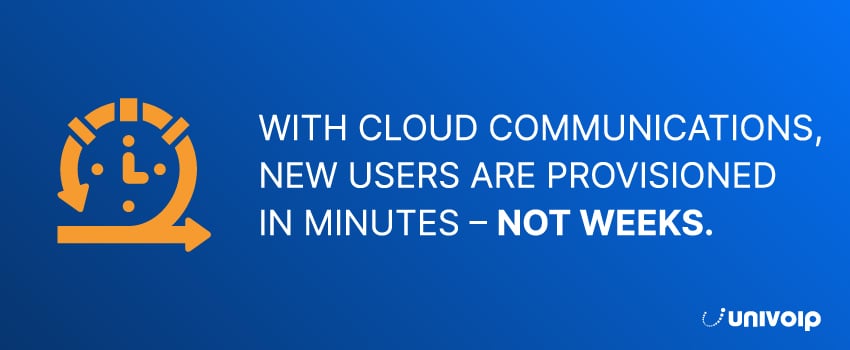
Adding 50 new employees? Opening a new office? With cloud communications, new users are provisioned in minutes – not weeks. There's no need to purchase additional hardware, run new phone lines, or hire contractors to install equipment.
2. Lower Upfront Costs and Predictable Expenses
Traditional phone systems require significant capital expenditure, including hardware purchases, installation costs, and ongoing maintenance costs. Cloud communications operates on a subscription model with predictable monthly costs per user. There's no large upfront investment, and you only pay for what you use.
3. Support Remote and Hybrid Work Models
Employees working from home, traveling, or distributed across multiple offices all have the same communication capabilities as those in headquarters. They use the same phone numbers, access the same voicemail, and participate in the same team channels – regardless of where they're physically located.
UniVoIP’s OfficeConnect™ platform was built specifically to support distributed teams with seamless voice, video, and messaging across any device.
4. Business Continuity and Disaster Recovery
Communication infrastructure that lives in the cloud is inherently more resilient because there’s no single point of failure. If your office loses power or connectivity, calls automatically reroute to mobile devices or alternate locations.
Many cloud providers – including UniVoIP – operate redundant data centers across multiple geographic regions to guarantee uptime, even during a disaster.
5. Advanced Features Without Custom Development
Features that once required expensive customization or third-party integrations, like call recording, intelligent routing, and auto-attendants, are now standard in most cloud communications platforms. Businesses get enterprise-grade functionality without enterprise-level IT budgets.
How Cloud-Based Communications Platforms Drive Customer Engagement
Cloud communications doesn't just improve internal collaboration – it fundamentally transforms how businesses interact with customers.
Omnichannel Customer Experience
Customers don't communicate through a single channel anymore. They might start with a website chat, follow up via email, and call if the issue isn't resolved. Cloud-based contact center platforms unify these interactions, giving agents a complete view of the customer journey regardless of which channel they use.
At UniVoIP, our Contact Center solutions bring voice, chat, email, and SMS into a single agent interface – ensuring context is never lost and customers never have to repeat themselves.

Intelligent Routing and Skills-Based Matching
Cloud platforms can analyze incoming interactions and route them to the best agent based on skills, availability, language, or customer history. This means customers get faster resolutions and agents handle inquiries they're best equipped to solve.
Real-Time Analytics and Insights
Cloud communications platforms generate detailed analytics on every interaction – call duration, wait times, abandonment rates, customer sentiment, agent performance. These insights allow businesses to continuously optimize their customer experience strategy based on real data rather than assumptions.
Proactive Engagement and Automation
With cloud-based systems, businesses can implement automated outreach – appointment reminders, delivery notifications, payment confirmations – across voice, SMS, and email. This keeps customers informed without requiring manual intervention from your team.
Making the Transition To Cloud Communications
Moving to cloud communications is less disruptive than many businesses expect, as long as you work with a provider who understands your business requirements and can guide you through implementation.
Typical transitions include:
- Assessment: Understanding your current infrastructure, usage patterns, and business needs.
- Planning: Designing your cloud communications architecture – user provisioning, number porting, integration requirements.
- Implementation: Deploying the platform, configuring features, and training users.
- Optimization: Refining configurations based on real-world usage and feedback.
At UniVoIP, we handle the entire process – from initial consultation through ongoing support – ensuring your transition is smooth and your team is productive from day one.
When Cloud Communications Makes the Most Sense
Cloud communications delivers value for virtually any business, but it's especially transformative in these scenarios:
Rapid Growth or Expansion
If you're hiring aggressively, opening new locations, or entering new markets, cloud communications scales at the speed of your business without infrastructure bottlenecks.
Distributed or Remote Workforces
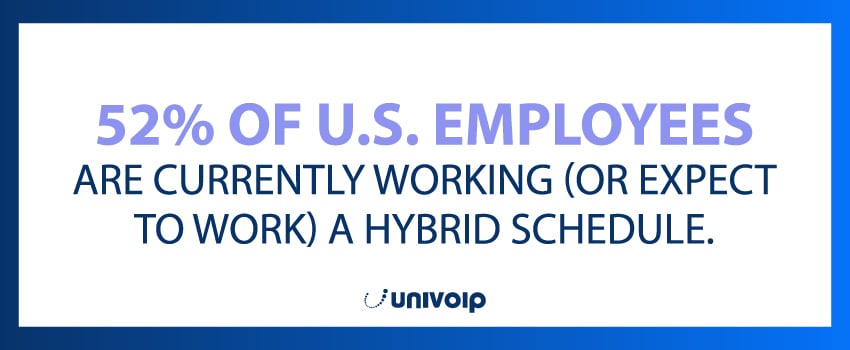
A 2026 survey found that 52% of U.S. employees are currently working (or expect to work) a hybrid schedule.4 Businesses with hybrid teams, field techs, or multiple office locations benefit enormously from cloud-based systems that provide consistent communication capabilities regardless of location.
Limited IT Resources
Small to mid-sized businesses without dedicated IT teams can offload the complexity of managing communication infrastructure to their cloud provider, freeing internal resources to focus on core business activities.
Customer-Centric Organizations
Cloud contact centers unify customer interactions and provide actionable insights to improve service, which are must-have capabilities for businesses that prioritize customer experience – whether in retail, finance, healthcare, or professional services.
Legacy System Replacement
If your current phone system is approaching end-of-life, becoming expensive to maintain, or can't support modern work styles, cloud communications offers a clear upgrade path without the capital expenditure of traditional replacements.
Scale Smarter With UniVoIP Cloud Communications
For today’s businesses, the question isn't whether to adopt cloud communications – it's which platform and provider will actually support your specific needs. At UniVoIP, we offer cloud-based voice, video, messaging, and contact center solutions designed to scale with your business – whether you're a 20-person startup or a multi-site enterprise.
Our Cloud Voice for Microsoft Teams, OfficeConnect™ UCaaS platform, and Contact Center solutions deliver the reliability, features, and support your team needs to communicate effectively, no matter where they work or how fast you grow.
Ready to scale your business with cloud communications? Contact UniVoIP today to discuss how our cloud-based platforms can support your growth.
Cloud Communications FAQs
What is cloud communications?
Cloud communications refers to voice, video, messaging, and collaboration services hosted and delivered over the internet rather than through traditional on-premise hardware. Instead of maintaining physical phone systems, servers, and cabling in your office, everything runs through secure cloud-based platforms managed by your provider. Employees can make and receive business calls from laptops, smartphones, or desk phones, customer service teams can handle voice, email, chat, and SMS from one interface, and your IT team stops troubleshooting hardware. As of 2024, over 2.4 million organizations were already using cloud-based communications.
How does cloud communications work?
The infrastructure lives in secure, redundant data centers run by your provider instead of on equipment in your office, and your team accesses services through softphones, web browsers, or mobile apps. Voice runs over VoIP, which transmits calls over the internet rather than through traditional phone lines. Because the platform is cloud-based, updates, patches, and new features are deployed automatically, with no downtime to schedule. Most platforms also fold in video conferencing, team messaging, file sharing, and screen sharing, creating one unified collaboration environment.
How does cloud communications help businesses scale?
It removes the infrastructure bottlenecks that slow growth. Adding 50 employees or opening a new office no longer means buying hardware, running new phone lines, or hiring contractors to install equipment: new users are provisioned in minutes, not weeks. Because the system is delivered over the internet, capacity expands or contracts at the speed of your business. Advanced features like call recording, intelligent routing, and auto-attendants come standard too, giving growing businesses enterprise-grade capability without an enterprise-level IT budget.
Does cloud communications reduce costs?
Usually, yes. Cloud-based voice uses VoIP, which can cut monthly phone bills by up to 50% by transmitting calls over the internet instead of traditional phone lines. There is no large upfront capital expenditure for hardware, installation, or ongoing maintenance; instead you pay a predictable monthly subscription per user and only pay for what you use. Because the provider hosts and maintains the infrastructure, you also avoid the staffing and equipment costs that come with running on-premise phone systems.
Is cloud communications reliable during an outage?
Yes, and that resilience is one of its biggest advantages. Because the infrastructure lives in the cloud rather than on a single box in your office, there is no single point of failure. If your office loses power or internet connectivity, calls automatically reroute to mobile devices or alternate locations. Many providers operate redundant data centers across multiple geographic regions to guarantee uptime even during a disaster, so your business keeps communicating when it matters most.
Does cloud communications support remote and hybrid work?
Yes. Employees working from home, traveling, or spread across multiple offices get the same communication capabilities as staff at headquarters. They use the same phone numbers, reach the same voicemail, and join the same team channels regardless of where they are physically located. This matters more than ever: a 2026 survey found that 52% of U.S. employees are working, or expect to work, a hybrid schedule. Cloud platforms give distributed teams consistent voice, video, and messaging across any device.
How does cloud communications improve customer engagement?
It unifies customer interactions and adds intelligence on top of them. Cloud-based contact center platforms bring voice, chat, email, and SMS into a single agent interface, so customers never have to repeat themselves and agents see the full journey. Incoming interactions can be routed to the best-matched agent based on skills, availability, language, or history, speeding up resolutions. Real-time analytics on wait times, sentiment, and agent performance let you keep improving, and automated outreach like reminders and confirmations keeps customers informed without manual effort.
Sources:
- https://www.360researchreports.com/market-reports/cloud-communication-platform-market-209235
- https://www.nextiva.com/blog/voip-stats.html
- https://www.five9.com/news/news-releases/new-five9-study-finds-75-consumers-prefer-talking-human-customer-service
- https://www.gallup.com/401384/indicator-hybrid-work.aspx